Puppy Journey · Beyond the first year
Beyond the First Year
The last stage of this Journey, and a short one. Age has stopped being the thing that organises care — which is precisely why a month-by-month series should stop here rather than carry on pretending otherwise.
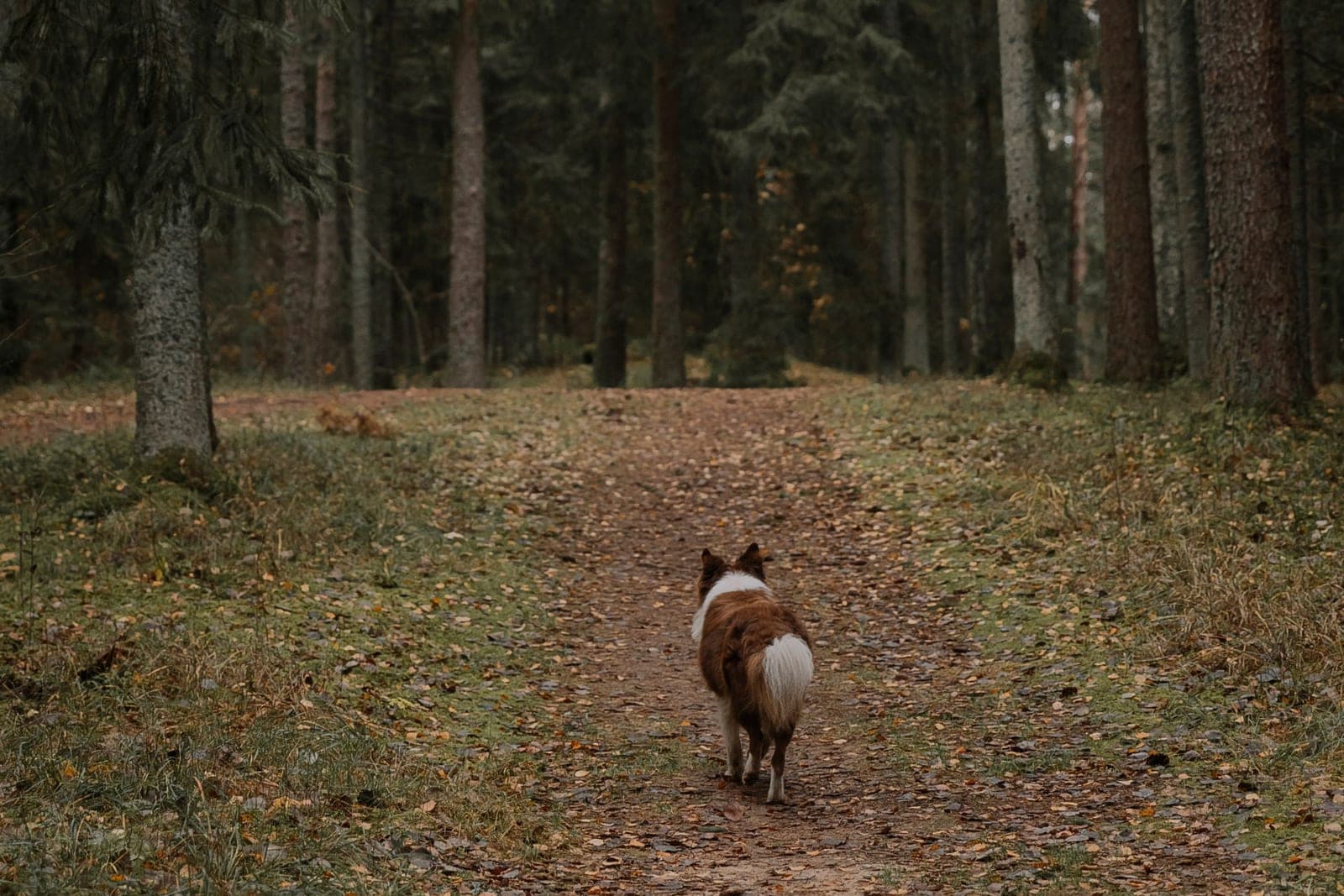
Where you are now
The timeline ends. The dog carries on.
Where you are now
The timeline ends. The dog carries on.
This is the last stage of the Puppy Journey, and it is short on purpose. Not because there is nothing left to do, but because from here a month number stops predicting anything useful.
For the first year, age was a reasonable organising principle. What mattered at nine weeks was true of almost every nine-week-old, and a series arranged by age could be genuinely helpful. That stops being true somewhere around now. What matters from here is your dog's size, its breed, its body condition, its health history, whether it is neutered, what it does with its days, and what it is like — and none of those move on a shared schedule.
So the honest thing for a month-by-month series to do is finish, rather than to carry on getting vaguer. That is what this page is.
- Nothing here says your dog is finished growing, or finished maturing. For many dogs neither is true yet.
- Care from here is individual rather than age-staged.
- The things worth continuing are the unglamorous ones: body condition, dental care, parasite prevention, training maintenance.
- If growth questions were still open at twelve months — food, exercise, neutering — they may still be open now.
Has your dog actually finished growing?
It depends on how big it was always going to be.
Has your dog actually finished growing?
It depends on how big it was always going to be.
This is the question the rest of the page turns on, and it does not have one answer.
The Merck Veterinary Manual puts skeletal maturity at roughly eight to twelve months in small and medium dogs, and notes that for some large and giant breeds it may not be reached until closer to fifteen or sixteen months. Both of those ranges overlap this stage. So a terrier here has almost certainly finished; a mastiff of exactly the same age may have months left.
That is why nothing on this page says “now that your dog is fully grown”. If you do not know which side of that line your dog is on, that is a good question for the next appointment — and a better one than any of the specific questions that depend on the answer.
Where this sits against clinical life stages
This is where the series ends, not where a life stage begins.
Where this sits against clinical life stages
This is where the series ends, not where a life stage begins.
It is worth being explicit about something, because the vocabulary here is genuinely confusing.
The American Animal Hospital Association's life stage guidelines define the puppy stage as running from birth to the cessation of rapid growth — approximately six to nine months, varying with breed and size — and the young adult stage as running from there until the completion of physical and social maturation, which they place at roughly three to four years in most dogs. By that framework your dog has very likely been a young adult, clinically, for some months already, and will remain one for years.
The Pet Club's Journey stages are an editorial timeline: a sequence of pages arranged by the age at which particular questions tend to come up. They are not a replacement for clinical life-stage terminology and they do not line up with it. This page is where this series ends, and nothing more than that. It is not where anything in your dog begins or finishes.
Feeding
The trigger is skeletal maturity, not the first birthday.
Feeding
The trigger is skeletal maturity, not the first birthday.
If your dog has already moved to an adult diet, that is likely fine and worth reviewing at the next appointment rather than revisiting now. If it has not, the question is not how old the dog is but whether it has finished growing.
Merck's guidance is to keep feeding a diet formulated for growth until skeletal maturity — not until growth appears to have slowed, and not on a birthday. For a small or medium dog that point has usually passed. For some large and giant breeds it may not arrive until closer to fifteen or sixteen months, which is inside this stage rather than behind it.
The habit worth keeping either way is reading the dog rather than the bag: ribs that can be felt without pressing hard, a waist visible from above, and portions adjusted against that with your veterinarian rather than against a chart.
Exercise
Built progressively, and not cleared all at once.
Exercise
Built progressively, and not cleared all at once.
There is no age at which a dog is issued a licence for adult exercise, and this page is not going to invent one. What there is, is a workload that should keep increasing gradually — duration before intensity, variety before either — and a set of things that determine how fast: how big the dog is, whether it has finished growing, what condition it is in, whether it has ever been injured, and how it copes on the day.
For a smaller dog that is skeletally mature, most of the earlier restraint has done its job. For a large or giant dog that may still be growing, the caution about repetitive forced exercise — running alongside a bicycle, long stair sessions, jumping down from height — has not expired just because a year has passed.
If you want to start doing something specific with this dog, that is a conversation with the veterinarian who has examined it and knows how big it will get. It is a much better question than a number of minutes.
Training and behaviour
Maintained, not completed.
Training and behaviour
Maintained, not completed.
Most dogs are noticeably easier at this point than they were at eight months, and it is tempting to read that as done. It is not — AAHA puts the completion of physical maturation, and of social maturation with it, at three to four years, so a dog in this stage has a long way to go behaviourally, and it will keep changing in ways that have nothing to do with training.
Adolescent behaviours fade unevenly. Recall, in particular, is maintained rather than achieved: it is the thing owners stop practising precisely because it stopped failing, and the thing that quietly degrades over the following year. Keep it in the weekly routine, keep paying for it, and keep the criteria rising slowly.
If something is going in the other direction — new fear, new reactivity, less tolerance for things that used to be fine — that is worth asking about rather than waiting out. Your veterinarian first, because discomfort changes behaviour, and a qualified behaviour professional where the answer turns out to be behavioural.
Neutering, if it is still open
For most dogs this is settled. For some large ones it is not.
Neutering, if it is still open
For most dogs this is settled. For some large ones it is not.
For most dogs reading this the decision is behind them. Where it is not, it is usually because the dog is large and the advice was to wait: AAHA's window for a male expected to finish over 45 pounds runs to about fifteen months, with a wider individualised window for females, and that overlaps this stage rather than preceding it.
If it is still open, this is a conversation to have rather than a deadline to meet, and the same caution applies as it did at nine months — the guidelines say findings in one breed may not transfer to another, so it is settled with the veterinarian who has examined your dog.
What changes about veterinary care
From a run of milestone appointments to something individual.
What changes about veterinary care
From a run of milestone appointments to something individual.
The first year of veterinary care is largely a schedule: a series of appointments arranged around the puppy's age, with a fairly predictable shape. What replaces it is not another schedule but a plan built around this particular dog.
What that plan covers is broadly the same list for everyone — body condition and weight, nutrition, dental health, parasite prevention, vaccination history and what is due when, reproductive status, and any screening that makes sense for the breed or the lifestyle. What differs is the emphasis and the frequency, and that is a conversation rather than a table. We are not going to print one here, because a schedule that fits a Labrador in Winnipeg and a chihuahua in Halifax equally well would be useless to both.
The one practical thing worth doing is going into the next appointment having asked for it explicitly: what does ongoing care look like for this dog, and when should I next be here?
Dental and parasite maintenance
Two things that are now ordinary, and easy to let slide.
Dental and parasite maintenance
Two things that are now ordinary, and easy to let slide.
The adult teeth have been fully in since well before this stage began — Merck puts the complete set in place by about seven months. What matters now is maintenance — home care that actually happens, and a mouth that gets looked at properly rather than glanced at. Dental disease is one of the most common findings in adult dogs and one of the most preventable, and the work that prevents it is dull and daily.
Parasite prevention is the same shape of problem: it stops being a new decision and becomes a thing that quietly lapses. Heartworm prevention is seasonal in most of Canada and follows the local mosquito season; tick activity runs longer at both ends of the year than most people expect. Ask for the plan as dates, once a year, and put them somewhere you will see them.
When to call a veterinarian
The list does not get shorter because your dog is grown.
When to call a veterinarian
The list does not get shorter because your dog is grown.
Contact your veterinary clinic — rather than waiting to see whether it settles — if a dog is breathing with effort, collapses or is profoundly unresponsive, is repeatedly vomiting, has persistent or bloody diarrhoea, cannot urinate or is repeatedly straining without producing anything, is suddenly and severely lame, is in unexplained pain, or you have any reason to think it has swallowed something it should not have. A suspected ingestion is a call rather than a wait-and-see, and it does not need to be accompanied by any other sign.
The trap at this age is the opposite of the one at eight weeks. A grown dog looks robust, it has been well for months, and there is no longer a run of appointments in which something would have been noticed. That combination buys symptoms more time than they should get. A dog that is off in itself for more than a day, is eating less than usual, has changed how it moves, or has become reluctant to be touched somewhere is worth a phone call rather than a week of watching.
Telephone triage is a normal part of what a clinic does, it usually costs nothing, and the answer is one of three things: come now, come in the morning, or here is what to watch for.
This describes what to look for so you know when to call. It does not diagnose, and it is not a substitute for examining your dog — only a veterinarian who has seen it can do that.
The hour of preparation that decides how the worst night goes
Where the Journey ends
Here. And then it is just your dog.
Where the Journey ends
Here. And then it is just your dog.
This is the last stage. There is not another page after it, and that is deliberate rather than an omission — a series arranged by age has nothing useful left to say once age stops being the variable.
What continues is everything that was never really about age: the training you maintain, the weight you watch, the teeth you brush, the prevention you keep on top of, and the relationship the last year was actually building. The library covers the rest, and it is organised by subject rather than by month, because that is how the questions arrive from here.
Whatever is left to work out about this dog, you now know it better than any page does.
This week’s checklist
- Ask whether your dog has finished growingIt decides the food question, the exercise question and — for some — the neutering one.
- Ask what ongoing care looks like for this dogAnd when you should next be there. A plan, not a schedule off a page.
- Learn to read body condition and check it monthly
- Start or keep up home dental care
- Get the parasite plan written down as dates, once a year
- Keep practising recall even though it stopped failing
- Keep the vaccination and treatment record somewhere you will find it
General information, not veterinary advice
The Pet Club is written by researchers and writers, not veterinarians. This describes what typically happens at this age and what to ask about. It does not diagnose, it does not recommend treatment, and it is not a substitute for examining your puppy — only a licensed veterinarian who has seen your dog can do that. If something is wrong, or you are unsure, call your veterinary practice or your nearest emergency clinic.
Sources
The publications behind the specific claims above.
- 2019 AAHA Canine Life Stage Guidelines — puppy as birth to cessation of rapid growth at approximately 6–9 months, and young adult through to completion of physical and social maturation by 3 to 4 years — American Animal Hospital Association
- Feeding practices in small animals — growth diets until skeletal maturity, roughly 8–12 months in small and medium dogs and closer to 15–16 months in some large and giant breeds — Merck Veterinary Manual
Where to go next
- Your provincial or territorial veterinary regulator, and what it licenses — Canadian Veterinary Medical Association