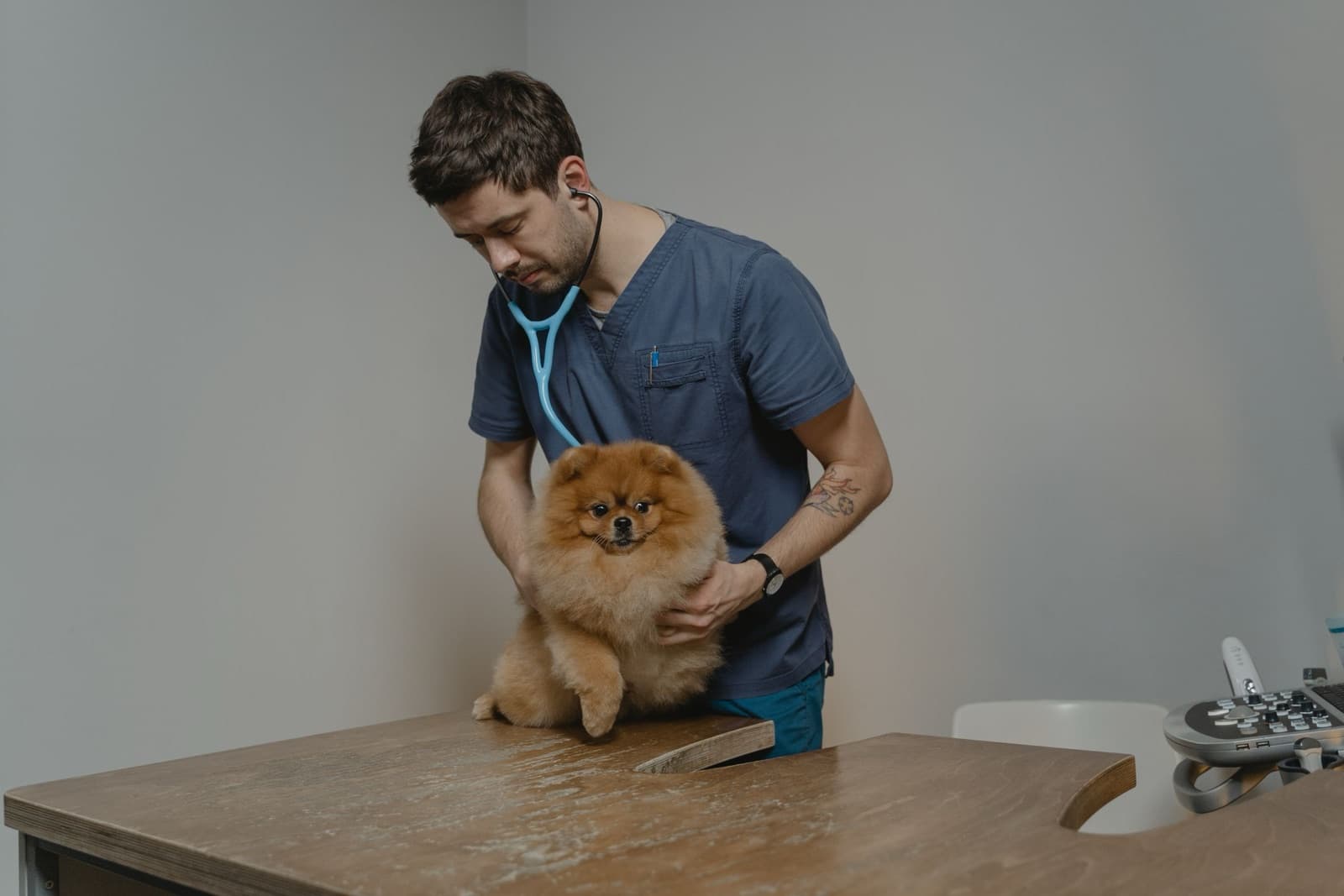
The worst time to choose a veterinary clinic is the first time you need one. You will be frightened, you will be in a hurry, and you will pick whichever practice answers the phone — which may be an excellent clinic, or may be one that cannot take a new patient for six weeks.
Choosing early costs an afternoon. It gives you a practice that already holds your animal’s history, already knows what it is like to handle, and can tell you in one sentence what to do at eleven at night. That relationship is the single most useful thing you can arrange before anything goes wrong.
This guide is about how to choose, not which to choose. The Pet Club does not rank or endorse clinics, and any list of “best vets in Canada” should be treated as advertising.
Where to start looking
Veterinary medicine in Canada is regulated provincially, and the regulator — not a review site — is the authority on whether a veterinarian is licensed to practise where you live. These bodies exist, in their own words, to protect the public interest through the regulation of veterinary practice.
They are worth knowing by name, because "the vet board" is not a single thing here:
- Alberta — Alberta Veterinary Medical Association (ABVMA)
- British Columbia — College of Veterinarians of British Columbia (CVBC)
- Manitoba — Manitoba Veterinary Medical Association (MVMA)
- New Brunswick — New Brunswick Veterinary Medical Association (NBVMA)
- Newfoundland and Labrador — Newfoundland and Labrador College of Veterinarians
- Nova Scotia — Nova Scotia Veterinary Medical Association (NSVMA)
- Ontario — College of Veterinarians of Ontario (CVO)
- Prince Edward Island — Prince Edward Island Veterinary Medical Association (PEIVMA)
- Québec — Ordre des médecins vétérinaires du Québec (OMVQ)
- Saskatchewan — Saskatchewan Veterinary Medical Association (SVMA)
- Northwest Territories — professional licensing is handled by the territorial government
- Nunavut — handled by the Department of Health
Yukon is not on that list, and we have left it off rather than guess: the CVMA register of regulatory bodies does not name one, and we have not verified what applies there. If you are in Whitehorse or anywhere else in the territory, ask the practice directly which body registers its veterinarians and how to check.
Note the pattern in the names. Some jurisdictions vest regulation in a college, which is a regulator in the same sense as a college of physicians; others use a veterinary medical association, which in those provinces carries the licensing function as well. The distinction matters when you are trying to work out whether the body you are looking at licenses veterinarians or merely represents them — and in the two territories on that list it is neither, it is a government department.
To check that a veterinarian is registered, go to the body for your own jurisdiction and use whatever it provides. Some publish an online member search; others answer the question by phone or email. We are not going to tell you there is one national lookup, because there is not, and we have not verified that every one of these bodies publishes a public register.
Complaints are the same shape of problem: it depends what the complaint is about. A regulator handles professional conduct — that is what regulating a profession means. A disagreement about a bill, a receptionist, or a wait is usually a matter for the practice itself first. An animal welfare concern may belong with a different body again, often a provincial SPCA or equivalent. Start by asking the regulator for your province or territory which of those it handles and where the others go; do not assume the answer is the same as one province over.
If you do not know which body applies to you, the Canadian Veterinary Medical Association maintains the list, linked at the foot of this article.
Beyond that, the useful sources are unglamorous:
- People who see a lot of animals in your area. Groomers, trainers, daycare and boarding staff, and rescue or shelter organisations all deal with several clinics regularly and form well-informed opinions.
- Neighbours with an animal like yours. A clinic that suits a placid senior cat and one that suits a large, anxious dog are not always the same clinic.
- Your previous veterinarian, if you are moving. A referral between practices is often better targeted than anything you will find online.
- Online reviews, read sideways. Individual star ratings say more about billing surprises and waiting rooms than about medicine. What is worth reading is repetition: the same specific complaint from many people over a long period is a signal, and one furious review is not.
Location, hours and the things that decide it in practice
Two clinics can look identical on paper and be nothing alike to live with.
Travel time, in the worst conditions you will actually face. Not the summer-afternoon drive — the January one, at rush hour, with a distressed animal in the back. If you do not drive, the question becomes public transit with a carrier, or which taxi and rideshare services in your city accept animals and under what conditions. Establish that now rather than at the moment you need it.
Opening hours against your own week. A practice with evening or weekend appointments may be worth a longer drive if the alternative is taking a half day every time.
How far ahead routine appointments book, and what happens when something is urgent. Ask directly: “If I call at nine in the morning and my dog has been vomiting since midnight, what happens?” Some practices hold same-day slots; some triage by phone; some will tell you honestly that you would be sent elsewhere. Any of those answers is workable. Not knowing which one applies is not.
Parking, accessibility and the entrance. Trivial until you are carrying a sixty-pound dog who cannot walk.
The question that matters most: after hours
Ask what happens at two in the morning, and write the answer down.
Arrangements vary widely. Some practices run their own after-hours service. Many refer to a dedicated emergency hospital, which may be some distance away. In parts of the country the nearest overnight option is genuinely far, and knowing that in advance changes how you plan.
What you want from this conversation is three concrete things: the name of where you would be sent, its address, and its hours. Put them somewhere you can find without thinking. The emergency preparation guide covers what to do with that information once you have it.
Fit: species, services and stage of life
- Species and type. A practice that sees dogs and cats routinely may or may not see rabbits, birds, reptiles or small mammals. Ask outright rather than assuming.
- Cat-specific handling. Some practices put real effort into low-stress feline handling — separate waiting areas, quieter examination rooms, unhurried technique. For a cat that finds the carrier traumatic, this is not a luxury.
- What is done in-house versus referred. In-house bloodwork, imaging, dentistry and surgery mean faster answers and fewer separate visits. Referral is not a weakness — knowing when to refer is a strength — but it helps to know the shape of it in advance.
- The stage you are actually at. A household with a new puppy needs a practice that is easy to reach for small questions during the vaccination series; a household with a fifteen-year-old cat needs one that is thoughtful about chronic disease and, eventually, about end of life. Ask about the part of the road you are on.
Communication, and what it tells you
You are choosing a practice you will talk to for a decade, often about decisions with no obviously right answer. How they communicate is not a soft factor.
Things worth noticing on the first contact:
- Whether the person on the phone answers the question you asked.
- Whether you can see the same veterinarian consistently, or whoever is available. Both models exist and both work; continuity is worth more with a complex or chronic case.
- How results are delivered — a call, a portal, a written summary — and how long that usually takes.
- Whether questions between appointments are welcome, and how they should be sent.
- Whether you are told what things cost before they happen, unprompted.
Records, estimates and being able to decide
Two practical rights are worth confirming early, because they are what make you an informed participant rather than a passenger.
Your animal’s records. The file — vaccination history, test results, imaging, medications, surgical notes — should be available to you and transferable to another practice on request. Ask how records are requested and whether anything is charged for copying them. If you are moving to a new clinic, arranging the transfer before the first appointment is far better than arriving with a memory of what happened last year.
A written estimate before significant work. A good practice offers one without being asked, explains what is included and what might change, and treats the conversation as normal. You should be able to ask which parts of a plan are essential now, which can wait, and what each one is expected to tell you. This is ordinary informed decision-making, not haggling, and any practice worth registering with will engage with it.
The phone call, and the first appointment
Call your shortlist. Ten minutes each is enough, and how the call goes is itself information.
Ask a prospective clinic
- Are you taking new patients, and how long is the wait for a first appointment?
- What are your hours, and do you offer evenings or weekends?
- What happens if I need to be seen today?
- What is your after-hours arrangement, and where exactly would I be sent?
- Do you routinely see my species, and at my animal’s age or stage?
- What do you do in-house — bloodwork, imaging, dentistry, surgery — and what gets referred?
- Will I see the same veterinarian each time?
- How are results communicated, and how quickly?
- Do you provide written estimates before procedures?
- How do I request my animal’s records, and is there a fee?
- What forms of payment do you accept, and is payment expected at the time of service?
- Can I bring my animal in for a short, friendly visit that is not an appointment?
Then book a routine examination and treat it as an audition. Was the animal handled patiently? Were you talked through what was being done? Did the estimate match the invoice? Did anyone ask what you were worried about? A practice that does those four things reliably is one you can trust with a hard decision later.
That first appointment is also the moment to settle the questions that are cheapest to answer early: the vaccination plan, parasite prevention appropriate to where you live, when to think about spaying or neutering, and — before there is any history in the file — whether you are going to insure or save.
Rural, remote and everywhere the choice is smaller
In much of the country, choosing between five clinics is not the situation. There may be one within a reasonable drive, mixed-practice hours built around farm work, and an emergency option that is hours away.
The planning that follows is more important, not less:
- Register with the nearest practice now, while you are not in a hurry.
- Establish the after-hours arrangement precisely, including the drive time to wherever you would be sent, in winter conditions.
- Ask whether phone or video triage is available, and what it costs.
- Keep a longer buffer of any ongoing medication than a city owner would.
- Find out whether any visiting or mobile services cover your area, and how far ahead they book.
If you need to change clinics
Changing practices is normal and does not require an explanation to anyone. Register with the new clinic, ask them to request the records, and book a routine appointment rather than arriving mid-crisis.
If you are leaving because something went wrong, and you believe there is a professional standards issue rather than a difference of opinion, the body to approach is your province's regulator from the list above — the CVO in Ontario, the CVBC in British Columbia, the OMVQ in Québec, and so on. What each will and will not investigate, and how the process runs, is set provincially, so start on that regulator's own site rather than assuming it works as it does elsewhere.
The short version
Choose before you need one. Weigh travel time in bad weather, real opening hours and the after-hours arrangement above everything on the website. Ask twelve questions on the phone, book a routine appointment, and watch how the conversation goes. Then write the emergency destination on the fridge and hope you never read it.