Choose a cat puzzle feeder by matching the food it can hold, the movement needed to reach that food and the cleaning routine you can maintain. Start with something easy to use. A more complicated puzzle is not automatically a better purchase, and a ball track that contains no food is a different kind of toy.
This is a buying checklist for Canadian households, not a tested ranking or a treatment recommendation. We checked the linked sources on October 15, 2026. No product here has been tested by The Pet Club.
Decide whether you want a feeder or a play toy
Before comparing brands, finish this sentence: “I want my cat to be able to…”
- Reach for dry food or treats: look at a stationary food puzzle with accessible compartments.
- Move a food dispenser: check the instructions for a rolling model, including compatible food size and the space it needs.
- Bat or chase without food: a ball circuit may fit the activity, but it is not a puzzle feeder.
- Use wet food: shortlist only designs the manufacturer specifically allows for that food. Do not assume a dry-food toy can be filled with wet food and cleaned adequately.
Our Catit Digger and Wave Circuit comparison shows why this distinction matters: one holds food, while the other is a ball track. This guide and that comparison include affiliate links. We may earn a commission from purchases through them. As an Amazon Associate I earn from qualifying purchases. See our advertising disclosure.
A five-question checklist before you buy
1. Can your cat reach the food in the easiest configuration?
Inspect how food is accessed, rather than choosing by a label such as “advanced” or “interactive.” Can compartments be left open? Are the openings suitable for your cat? Can you demonstrate an easy success without changing the product in a way its instructions do not permit?
The BC SPCA's introduction guide advises beginning with a simple puzzle and an easy setting. It also recommends retaining the usual food bowl while the cat learns and counting food from both sources in the normal daily amount. Do not withhold normal food to force a cat to solve a puzzle. If the cat cannot obtain food or becomes frustrated, simplify the activity or stop.
2. Does the design fit the room?
Measure the space where the feeder will actually sit, including room for your cat to approach and move around it. A compact product photograph can hide a substantial base. Check the assembled measurements, not the dimensions of the shipping box.
For a rolling model, consider where it could travel: under the sofa, beside stairs or into another pet's feeding area. A fixed model avoids that particular movement, but still needs a suitable surface and supervision according to its instructions. The right choice is the one you can use in your home, not the one with the most elaborate photograph.
3. Can you clean every food-contact part?
Look for instructions before checkout. Establish which pieces separate, whether washing is by hand or machine, how they dry and whether small recesses are accessible. “Easy clean” without actual directions is not enough information to plan a routine.
Catit's Digger cleaning guide specifies warm water, dishwashing soap and a soft sponge, with full drying before reassembly. It warns against abrasive sponges and aggressive detergents. Those directions belong to that product; they are not dishwasher permission for every feeder.
4. Is the Canadian purchase practical?
Record the exact model, current retailer, delivered price, return conditions and availability of replacement pieces. Ask whether opening or using a food-contact item prevents a return. Do not assume another retailer's policy applies, or that an online listing guarantees stock at your local store.
Include upkeep in the decision. If the feeder takes more time to wash than you can realistically provide, a simpler design may be the better purchase. Buying several toys at once is unnecessary before you know which activity your cat will use.
5. What would make you stop using it?
Check the manufacturer's supervision and damage instructions. Plan to remove a damaged item rather than improvise a repair that changes its food-contact surfaces or moving parts. Changes in appetite, difficulty eating or other health concerns need veterinary advice, not a more challenging feeder.
Worked example: a reach-in feeder
The Catit Senses Digger specification describes a base with five removable cups in two formats for dry food or treats. Its listed assembled dimensions are 37 × 37 × 11 cm. These are manufacturer specifications, not our measurements, and should be checked against the exact model you buy.
That gives a shopper three concrete checks: whether there is space for the base, whether the cup access suits the cat and whether the separate parts fit the cleaning routine. It does not prove that every cat will enjoy the toy or that it will change weight or behaviour. The Canadian Homes Alive listing also instructs owners to supervise use and remove the toy if damage appears.
If a stationary dry-food puzzle suits your cat and the space you measured, you can check the Catit Senses 2.0 Digger on Amazon.ca below. Confirm the exact model, seller, delivered cost and return conditions before ordering. A ball-track toy serves a different purpose and is not a substitute for this feeder.
Keep the first purchase small
Write a shortlist of two options using these headings: food compatibility, easiest setting, assembled size, cleaning, supervision, delivered cost and return eligibility. Leave unknown fields blank and ask the seller before buying. A missing measurement is a reason to investigate, not to guess.
If a reach-in feeder fits your plan, compare the Digger with the non-feeding Wave Circuit before choosing an activity. For the wider home setup, use our indoor cat enrichment guide. A feeder is one optional tool within that routine, not a substitute for it.
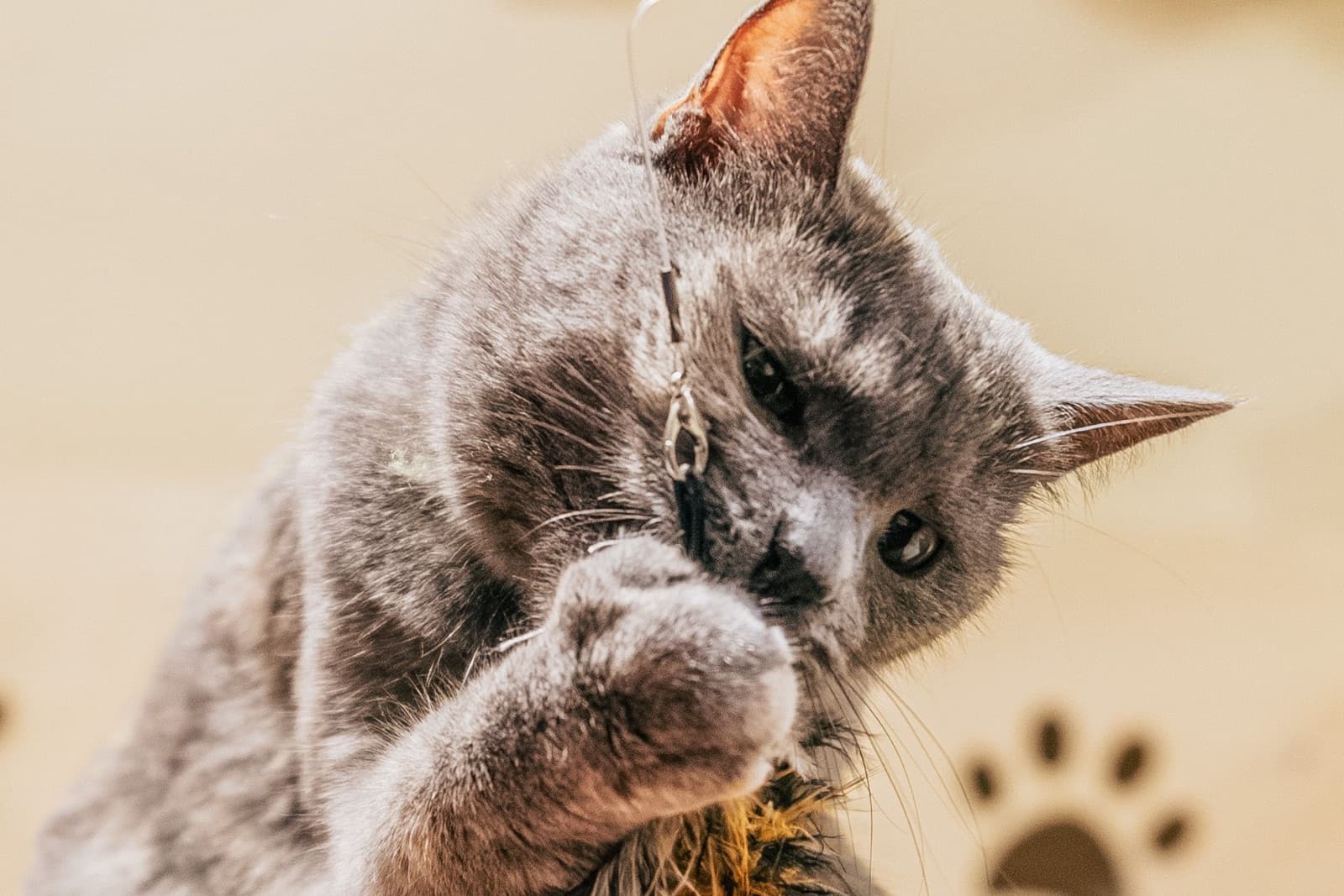
The editorial photograph illustrates cat play. It does not show a reviewed feeder or document a product test.