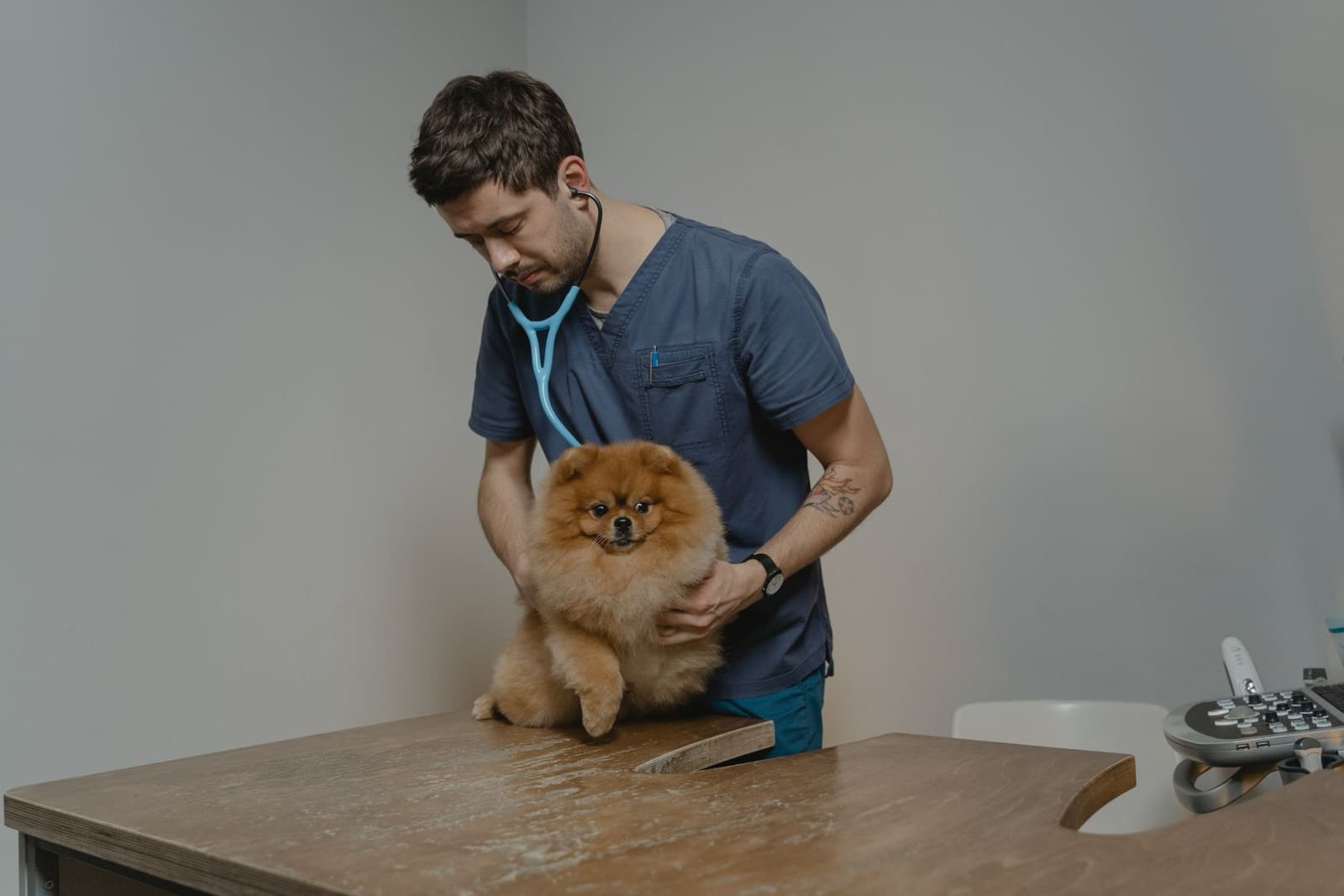
Changes in appetite, nipples, belly size or nesting can suggest dog pregnancy, but they cannot confirm it. Dogs can show similar changes during a false pregnancy after heat. A veterinarian can distinguish the possibilities using the history, examination and appropriately timed testing—not a symptom checklist alone.
Possible pregnancy signs—and why they are not proof
The PDSA's veterinary dog-pregnancy guide describes changes that may become noticeable over pregnancy:
- Appetite changes: eating more or less can have many causes, so neither confirms pregnancy.
- Weight gain and a larger abdomen: these are generally more apparent later, not a dependable early test.
- More prominent mammary glands or nipples: these can also occur without a true pregnancy.
- Changes in activity or behaviour: resting more, seeking attention or nesting are clues to report, not a diagnosis.
Some pregnant dogs have few obvious early signs. A recent mating does not prove conception, and not noticing a mating does not rule it out. If your dog is vomiting, not eating or unusually lethargic, contact a vet rather than assuming the changes are normal pregnancy symptoms.
False pregnancy deserves its own check
A dog can develop mammary changes, milk or nesting after heat without carrying puppies. This is often called false or phantom pregnancy. The important distinction is that pregnancy-like behaviour does not tell you whether fetuses are present.
Hormone testing also needs context. Cornell's explanation of the canine heat cycle notes that progesterone rises after ovulation whether or not a dog becomes pregnant. A progesterone result alone is therefore not pregnancy confirmation.
UC Davis's veterinary pregnancy-diagnosis guide explains why visible signs are unreliable and how testing helps. Do not assume a dog who seems unwell “just has a phantom pregnancy”; illness still needs examination.
Which tests can confirm pregnancy, and when?
Give the clinic all possible mating dates, not only the first one. Your veterinarian will choose the test and timing. Days after mating and days of pregnancy are not interchangeable measurements.
Ultrasound: often around three to four weeks
UC Davis describes ultrasound detection around 21–30 days after breeding. Merck's pregnancy-determination guidance identifies roughly 25–35 days of gestation as a useful window and warns that scans before 21 days may miss a pregnancy.
The practical takeaway is to let the clinic time the scan, especially when dates are uncertain. Ultrasound can assess fetal heart activity at that examination, but it does not reliably give an exact puppy count or guarantee that every puppy will be born healthy.
Relaxin blood testing: timing and litter size matter
Relaxin is a hormone used in veterinary pregnancy testing. Texas A&M's diagnostic laboratory lists testing in dogs as possible from about day 22 of pregnancy and more reliable after day 28.
A negative test too early may need repeating. VCA's pregnancy-testing explanation also notes that a small litter can produce a negative result and that a positive test is not a guarantee of living puppies. The vet may recommend a repeat test or imaging rather than interpreting one result in isolation. Ask your Canadian clinic about availability and an estimate; these source dates are not a universal clinic protocol.
Examination and later X-rays
A trained veterinarian may assess the abdomen during an examination, but palpation has limits. Do not squeeze or press your dog's belly to feel for puppies. UC Davis explains that palpation does not establish whether the fetuses are alive.
X-rays answer a later-stage question. Merck describes fetal skeletons becoming visible around 42–45 days of gestation and later imaging, after about day 55, as better for counting. Your vet decides whether and when an X-ray is appropriate. An early X-ray is not a substitute for appropriately timed pregnancy confirmation.
Why “63 days” is not a due-date calculator
Dog pregnancy is often described as about nine weeks. Merck's reproductive-system reference distinguishes approximately 62–64 days from ovulation from the more variable interval when counting from mating at an unknown stage of the heat cycle.
If you know only the mating date, adding 63 days does not establish a safe deadline for delivery. Ask your vet to estimate the stage and provide a plan for monitoring, labour and emergencies. A dog who is unwell needs care regardless of what an online calendar says.
What to tell your veterinarian today
A useful booking checklist
- Her last heat, all possible mating dates, whether mating was witnessed and any time she had unsupervised access to an intact male.
- Whether she has been spayed, previous pregnancies or reproductive problems, and relevant health history.
- When appetite, activity, nipple or abdominal changes began, plus any vomiting, discharge or increased drinking.
- Her food, prescribed medicines, parasite treatments and supplements.
- Whether mating was accidental or the pregnancy would be unwanted. Call promptly to discuss veterinary options rather than waiting for a larger belly.
Do not try home pregnancy-ending remedies or add calcium, medicines or other supplements on your own. Ask before changing treatment; do not stop prescribed medicine without advice. Keep her away from intact males while you clarify what happened.
If you need a clinic, our guide to finding a veterinarian in Canada explains how to check local options. Request an itemised estimate for the consultation and proposed tests rather than relying on a national price claim.
Everyday care after pregnancy is confirmed
Nutrition is about stage and body condition
Ask your veterinary team for a complete, balanced diet suitable for pregnancy and nursing and a plan for adjusting portions. Merck's feeding guidance distinguishes early pregnancy from the higher energy demands of late pregnancy and nursing. Simply doubling food from the first day can overfeed a dog; her starting body condition and litter matter. Arrange follow-up rather than using a fixed feeding multiplier from an online chart.
Keep water available. Do not routinely add calcium or other supplements: Merck's calcium guidance warns that calcium supplementation during pregnancy can contribute to low blood calcium after birth. A prescribed treatment is different—follow the treating veterinarian's instructions.
Prepare the household before the due period
Ask about appropriate activity, a quiet whelping space and when to recheck her. Bring a list of medicines and parasite treatments; pregnancy can change which products are suitable. Save the clinic's labour instructions, an after-hours number and a transport plan. Confirm who can help if the usual driver is unavailable.
The PDSA's whelping guide identifies strong straining without a puppy, a stuck puppy, green discharge before the first puppy, or a mother who seems unwell as reasons for veterinary help. Call promptly if worried; do not pull a puppy or give labour-inducing medicines yourself. This page is not a home-delivery protocol.
For future pregnancy prevention, discuss individual dog spay timing with your veterinarian. Tell the clinic if pregnancy or false pregnancy is possible before arranging routine surgery.
Symptoms that should not wait
Pyometra is a serious uterine infection that can be mistaken for pregnancy-related changes. The American College of Veterinary Surgeons explains that pyometra can occur without visible discharge when the cervix is closed. Do not use the absence of discharge to rule out an emergency.
Save the clinic's after-hours instructions and your nearest emergency veterinary hospital's contact details. Our emergency-vet guide covers preparing for urgent care. Once pregnancy is confirmed, request a written birth and emergency plan; this diagnosis guide does not teach home delivery.
Common questions
Can a human pregnancy test tell if my dog is pregnant?
No. A human urine pregnancy test is not valid for confirming or ruling out dog pregnancy. Veterinary relaxin testing and imaging are different from a human test. Ask your vet which method fits the timing and situation.
Can a dog be pregnant with no early signs?
Yes. A lack of noticeable nipple, appetite or belly changes does not rule it out. If mating was possible, contact the clinic for advice about when to test.
Does a negative early test mean no puppies?
Not necessarily. Date uncertainty, testing too early and, for relaxin tests, small litters can affect the result. Follow the vet's repeat-testing or imaging plan rather than relying on the first negative.
Will an ultrasound tell me exactly how many puppies to expect?
Not reliably. It is useful for confirmation and assessment at the time of the scan; later radiographs may be better for estimating litter size. Neither a scan nor a blood test promises a trouble-free birth.