Take your puppy to the same toilet spot after waking, after meals and big drinks, after play, and before bed. Offer regular trips in between, and give a small reward as soon as your puppy finishes peeing or pooping in the right place. Use the schedule below for the first few days, then adjust it to the pattern you actually see.
Puppy potty training schedule for the first week
For a young puppy, VCA Canada's housetraining guide suggests offering trips about every one to two hours while awake, with extra opportunities during active play. Treat those intervals as starting points. If your puppy consistently has an accident before the next trip, move the trip earlier.
| When | What to do |
|---|---|
| First thing in the morning | Go straight to the toilet spot. Keep the leash and rewards by the door the night before. |
| After food or a big drink | Offer an outing soon after. If your puppy pees but usually poops later, supervise inside and make a second trip before their usual poop time. |
| After a nap or play | Head out as soon as they wake up or play ends. Take a break during longer bouts of energetic play. |
| Between activities | Set a reminder for the next trip. Go sooner if your puppy starts sniffing in circles, heads for the door or suddenly wanders away from play. |
| Before bed and overnight | Offer one last toilet trip. Young puppies may still need an overnight outing. Keep it quiet, reward success and go back inside. |
How to teach your puppy to pee and poop outside
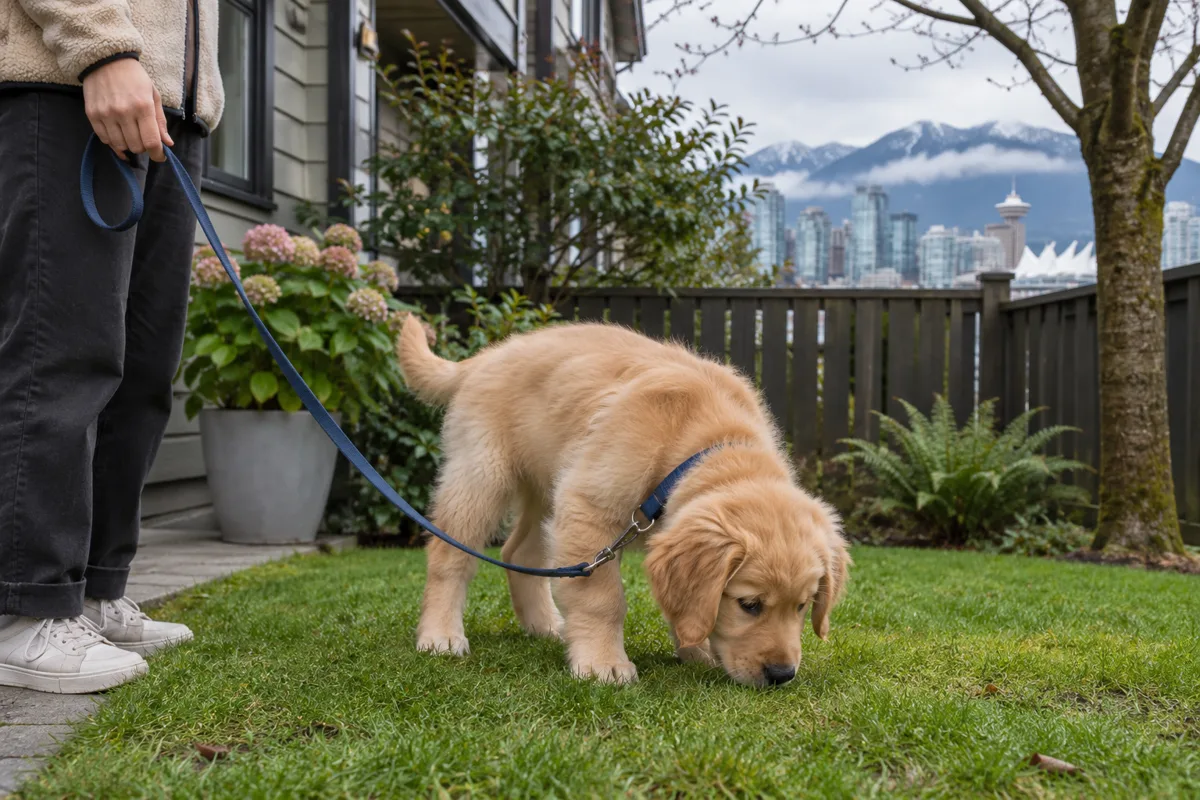
- Pick a spot you can reach quickly. Start with a quiet patch your puppy can sniff without having to greet people or dogs. Ask your veterinarian which surfaces are appropriate before your puppy's vaccinations are complete.
- Give your puppy time. Use a loose leash and stand quietly. If you want to teach “go potty,” say it softly when your puppy starts going so the words become associated with the action.
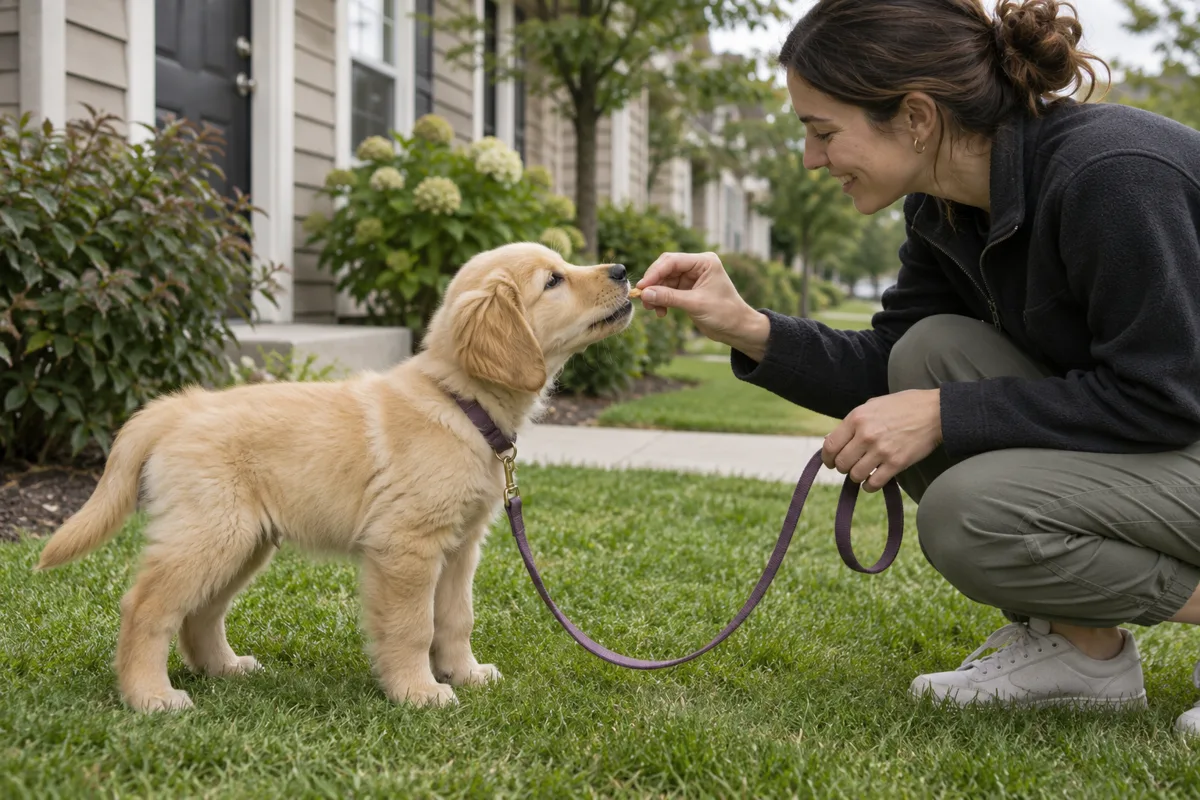
- Reward outside, as soon as they finish. Have a small treat ready. Rewarding at the spot makes it clear what earned the treat. If your puppy enjoys exploring, a short sniff afterward can help keep toileting from always ending outdoor time.
- Try again if nothing happens. Come back inside, keep your puppy close and supervised, and go back out shortly. Give them another chance before letting them roam the house.
Why puppies pee outside and poop inside
Some puppies finish one job and still need a second opportunity. A busy sidewalk or a short outing can also cut the trip short. Track what happens for three days, including whether your puppy peed, pooped or did neither. If your puppy usually poops after coming back from breakfast, try a second trip before the time you normally find the accident.
Use a note like breakfast at 7:00 → pee outside at 7:08 → poop inside at 7:25. On the next morning, offer another trip before 7:25. That is a worked example for one puppy, so start with your own notes and adjust when their routine changes.
Apartment living, puppy pads and Canadian weather
Count elevator and hallway time as part of getting to the toilet. Set the reminder early enough to reach the spot, and keep shoes and the leash ready. A private, sheltered spot can make rainy mornings easier. In snow, clear a short path and a small area so your puppy can stand and sniff comfortably.
If outdoor access is temporarily impractical, choose one consistent indoor toilet station. Keep it away from the bed and food bowls. If the goal is outside, plan for outdoor practice once a safe spot is available and gradually reduce reliance on pads as outdoor success becomes consistent. Ask your veterinarian about a safe setup if your building's outdoor area is heavily used by unfamiliar dogs.
What to do when there is an accident
If you catch it starting, calmly guide your puppy to the toilet spot. Reward them if they finish there. If you find it later, clean it with a pet urine cleaner appropriate for the surface, following the label. Avoid yelling, punishment or rubbing your puppy's nose in it. Then ask what happened immediately before the accident and change one thing, such as an earlier trip after play or closer supervision in the hallway. The BC SPCA's dog-care guidance recommends frequent opportunities and reward-based teaching.
How long does puppy potty training take?
Progress varies. Look for fewer indoor accidents, more successful trips and an easier time noticing your puppy's signals. Give more freedom one room at a time after the routine is working. A setback after a change in schedule or a new room is a reason to shorten intervals and supervise more closely. For a broader routine, see bringing home a puppy: the first 30 days.
When should I call a vet?
Call your veterinarian if a reliably trained puppy suddenly starts having accidents or if you see pain, blood or a sudden change in how often they urinate. Repeated attempts with no urine need emergency veterinary care. Contact your veterinarian promptly for diarrhoea accompanied by vomiting, marked tiredness or blood in the stool. See VCA's urinary guidance and its puppy diarrhoea guidance.